
Find Louisiana Warrant Records
Louisiana warrant records are public documents held by parish sheriff offices, district courts, and the Louisiana State Police across all 64 parishes for warrant records. You can search for active warrants, arrest warrants, and bench warrants through multiple state and local agencies. The Louisiana State Police Bureau of Criminal Identification and Information keeps the central criminal records database for the whole state. Each parish sheriff also runs its own warrant system. This page walks you through every way to search for Louisiana warrant records, from online tools to in-person warrant records requests at the courthouse.
Louisiana Warrant Records Quick Facts
Louisiana State Police Warrant Records
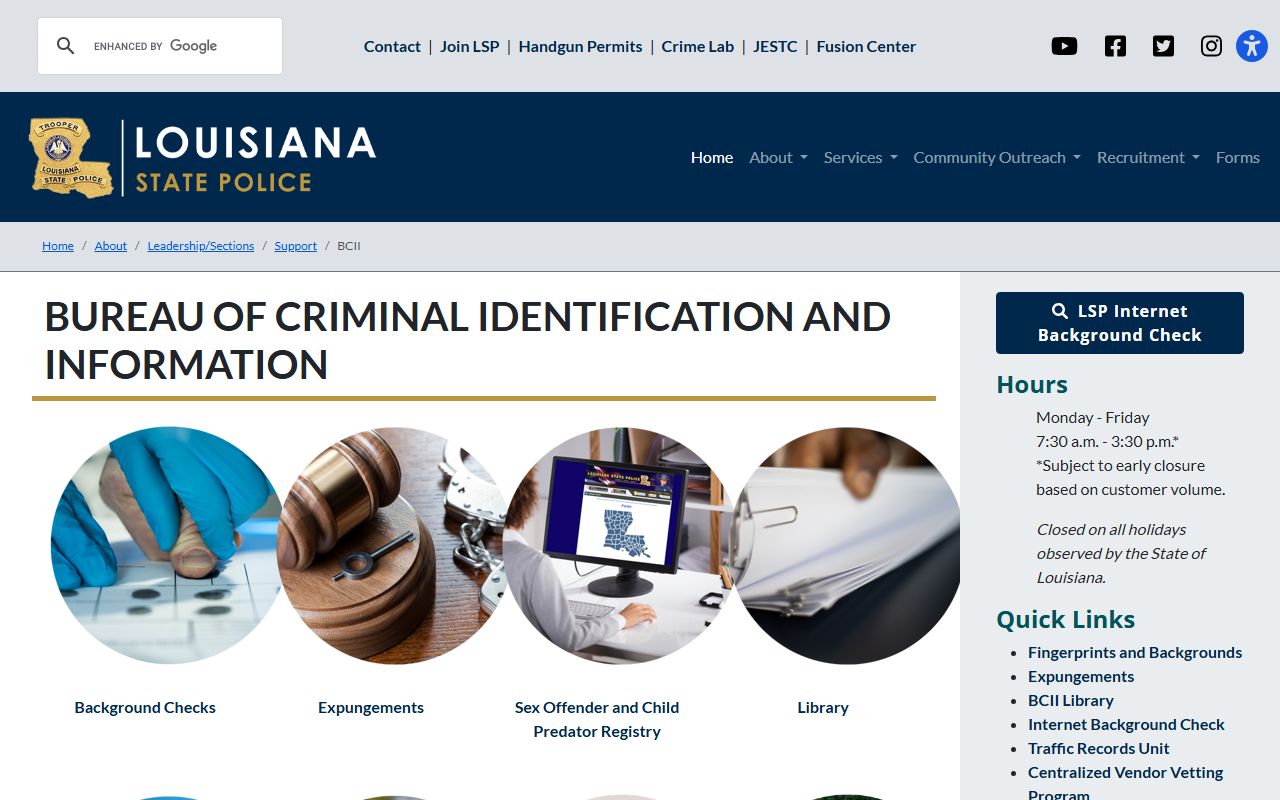
The Louisiana State Police Bureau of Criminal Identification and Information (BCII) is the central warrant records state records repository for criminal history in Louisiana. BCII keeps the Louisiana Computerized Criminal History (LACCH) database and the Automated Fingerprint Identification System (AFIS). Every arrest, charge, and warrant that law enforcement agencies file across all 64 parishes for warrant records goes into this system. The office is at 7919 Independence Blvd in Baton Rouge and can be reached at (225) 925-6325. The Criminal Records Office has a separate line at (225) 925-6096. Hours are Monday through Friday, 8:00 AM to 3:30 PM.
BCII operates under the authority of Louisiana Revised Statute 15:587, which governs the release of criminal records information. The database holds arrest records, dispositions of arrests, probation and parole bookings, incarceration data, and fingerprint submissions from every law enforcement agency in the state for warrant records. Court dispositions and correctional facility records feed into the system as well. This makes BCII the most complete source for Louisiana warrant records at the state level.
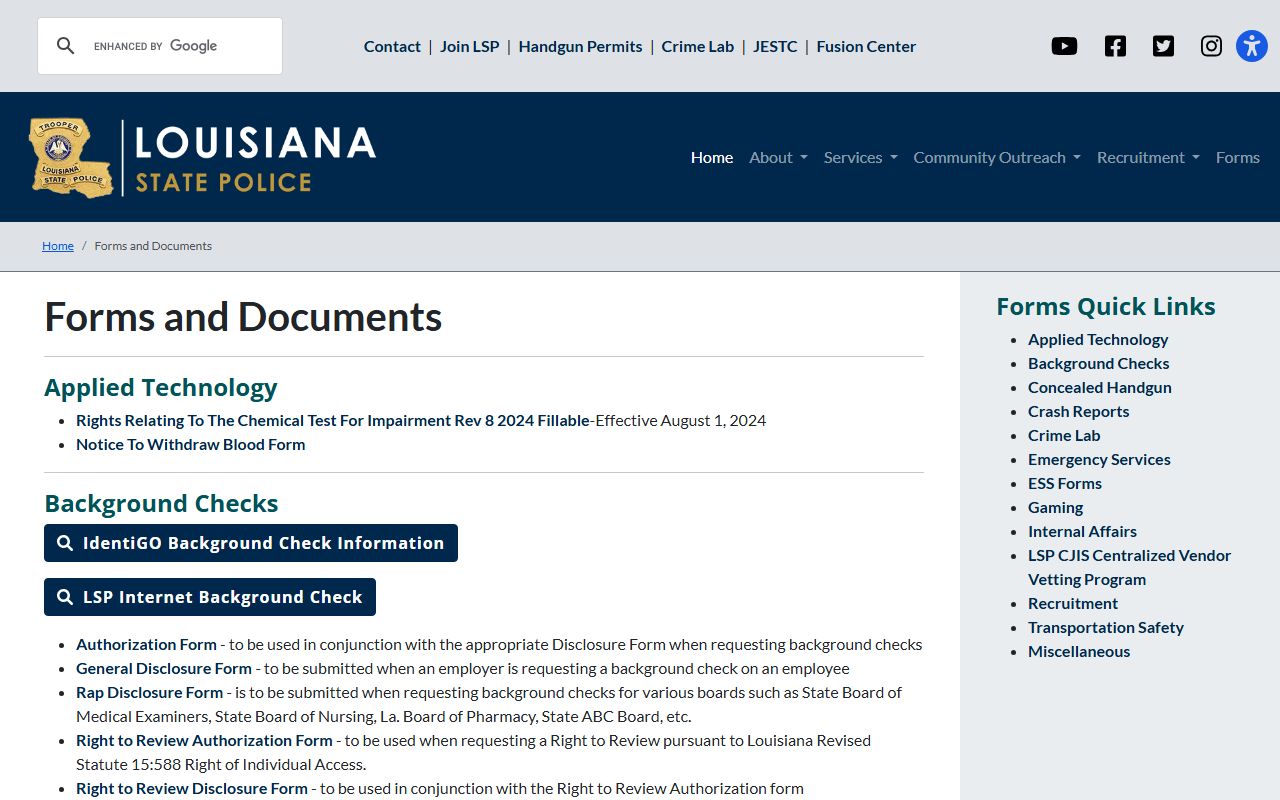
The BCII mailing address for all criminal record requests is Louisiana State Police, BCII-LCJIS, Post Office Box 66614, Box A-6, Baton Rouge, LA 70896. Forms for background checks and right to review requests are accessible at lsp.org/forms.
You can learn more about the bureau at lsp.org. The office processes thousands of criminal history requests each year from individuals, agencies, and courts.
Right to Review Louisiana Warrant Records
Under Louisiana Revised Statute 15:588, every person has the right to get a certified copy of their own Louisiana criminal history record. This is called a Right to Review. It shows you what BCII has on file under your name, including any arrests, charges, warrant activity, and dispositions. There are three ways to do it.
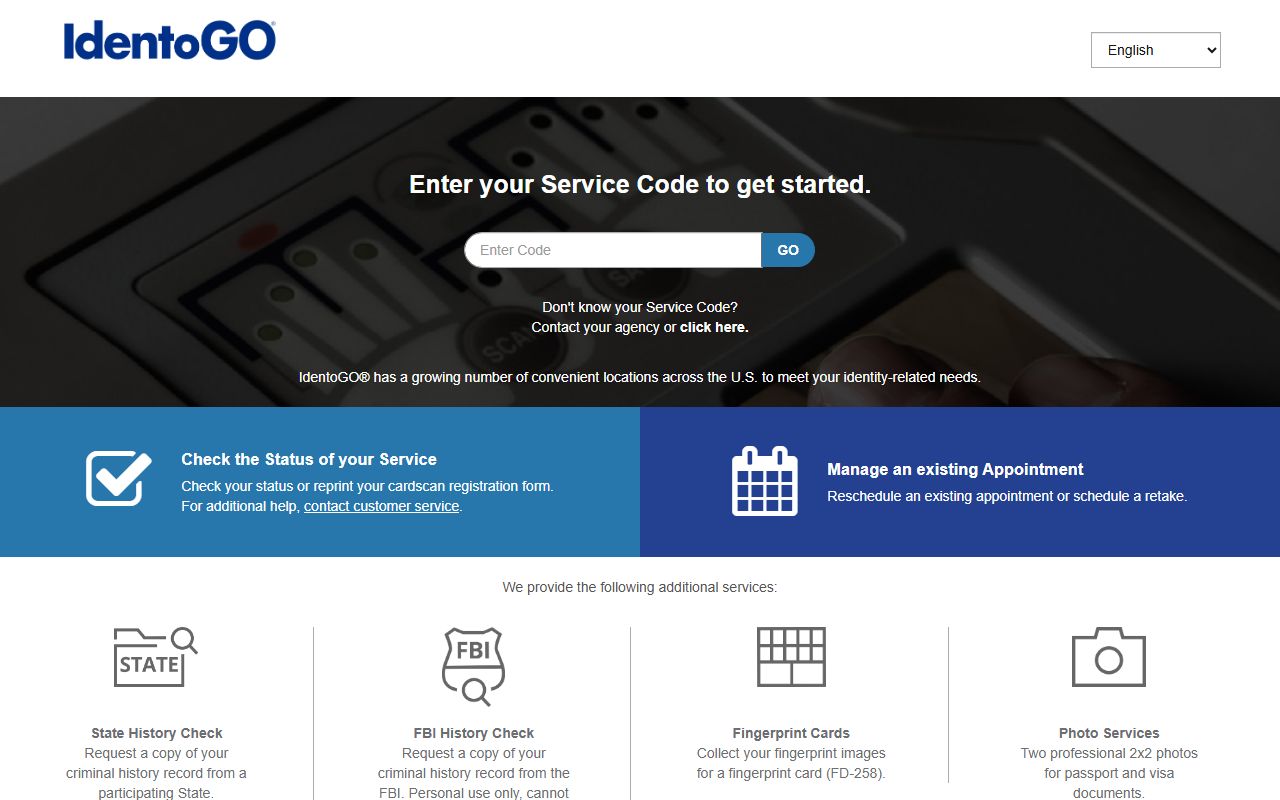
The recommended way is digital fingerprinting through the Louisiana Applicant Processing System (LAPS). You schedule an appointment at uenroll.identogo.com at one of over 30 IdentoGO locations across Louisiana. Bring a valid photo ID. Your fingerprints get captured electronically and sent to both the state police and the FBI. You can choose to get results by mail or through a secure email link. The mailed copy comes stamped "True Copy," signed by an LSP employee, and embossed with the raised state seal. The electronic option gives you a one-time access link that expires after 30 days. You must print it from a computer, not a mobile device.
The mail-in method works too. You fill out the Right to Review Authorization Form and the Right to Review Disclosure Form from lsp.org/forms. Get fingerprinted at your local law enforcement agency on an FBI Applicant Fingerprint Card (FD-258). Send the forms, fingerprint card, a $31 payment, and a self-addressed stamped envelope to BCII in Baton Rouge. Processing takes 15 to 21 business days from when they log your payment.
You can also go in person to LSP headquarters at 7919 Independence Blvd in Baton Rouge. Arrive before 3:00 PM for a same-day response. After 3:00 PM, your results get mailed or are ready the next business day. The in-person fee is $31 for processing plus $10 for fingerprinting at LSP, totaling $41. They take money orders, cashier's checks, business checks, and credit or debit cards.
Louisiana Internet Background Check for Warrant Records
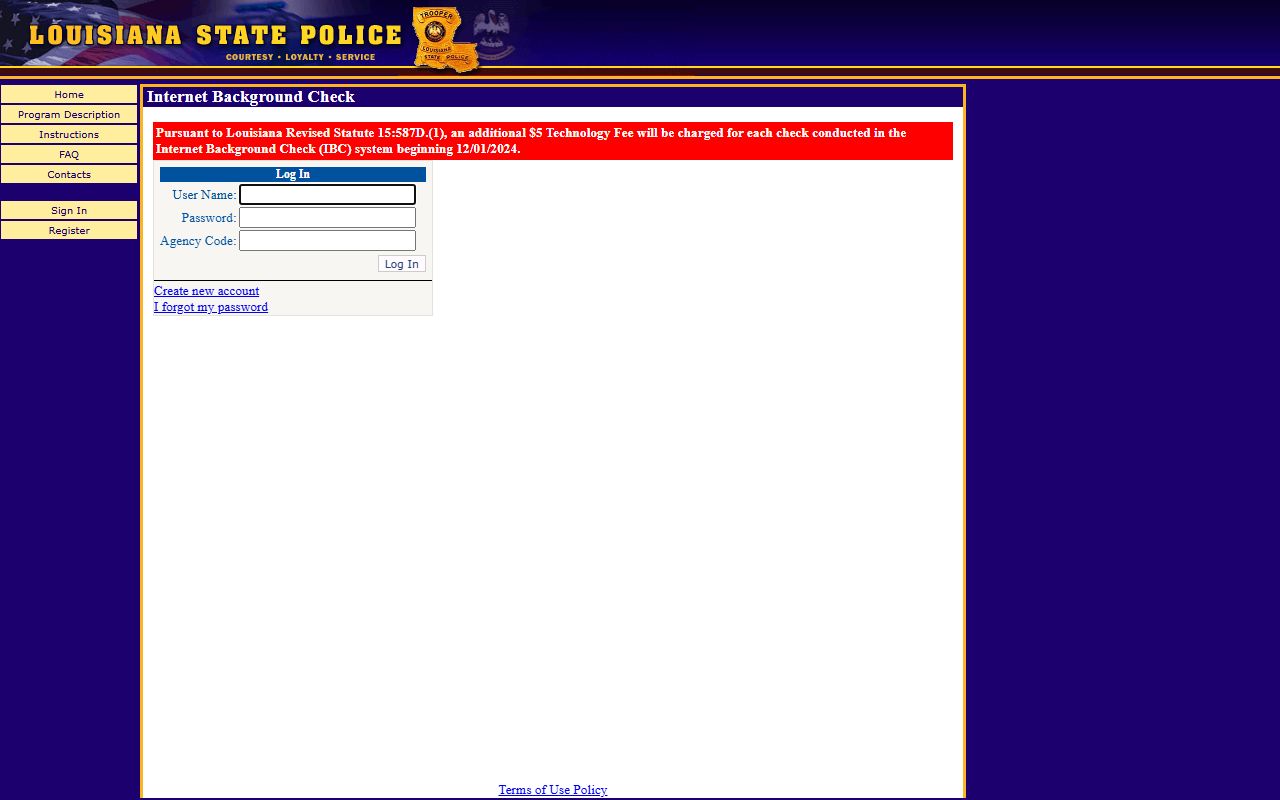
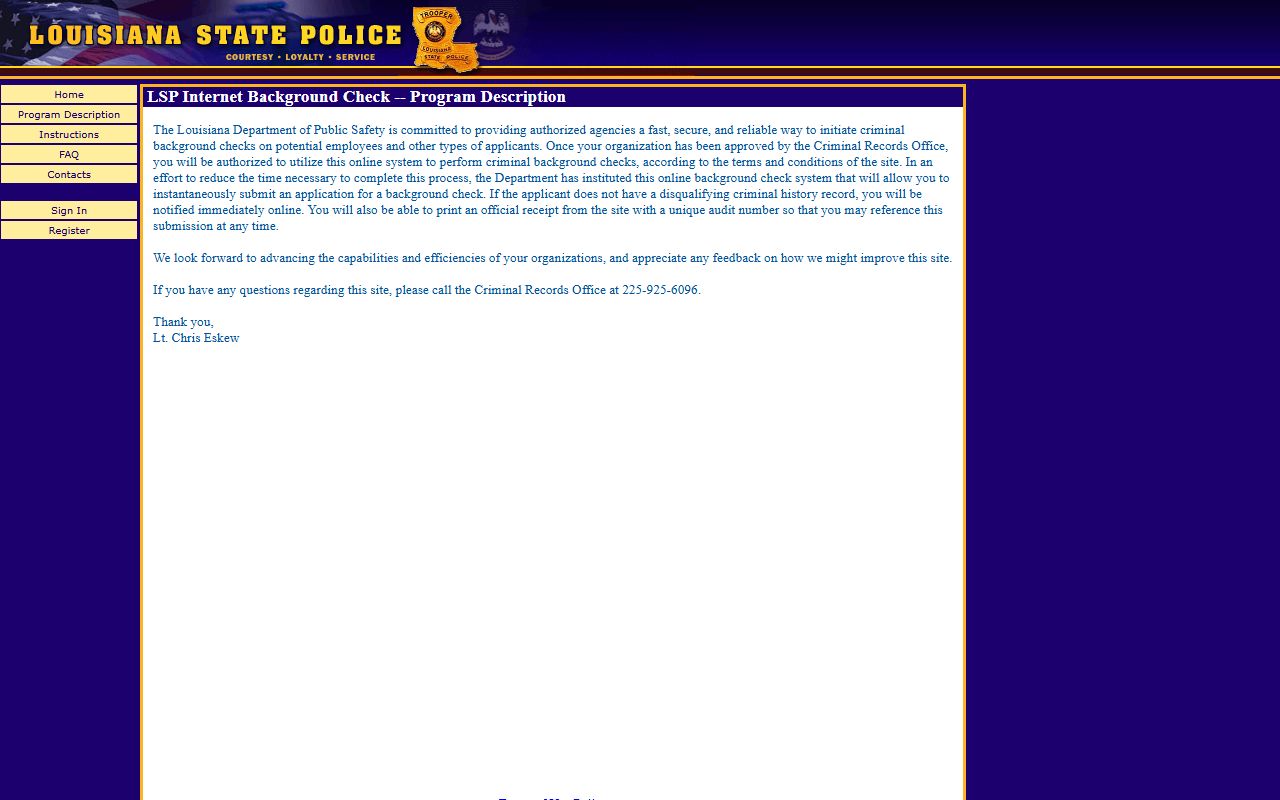
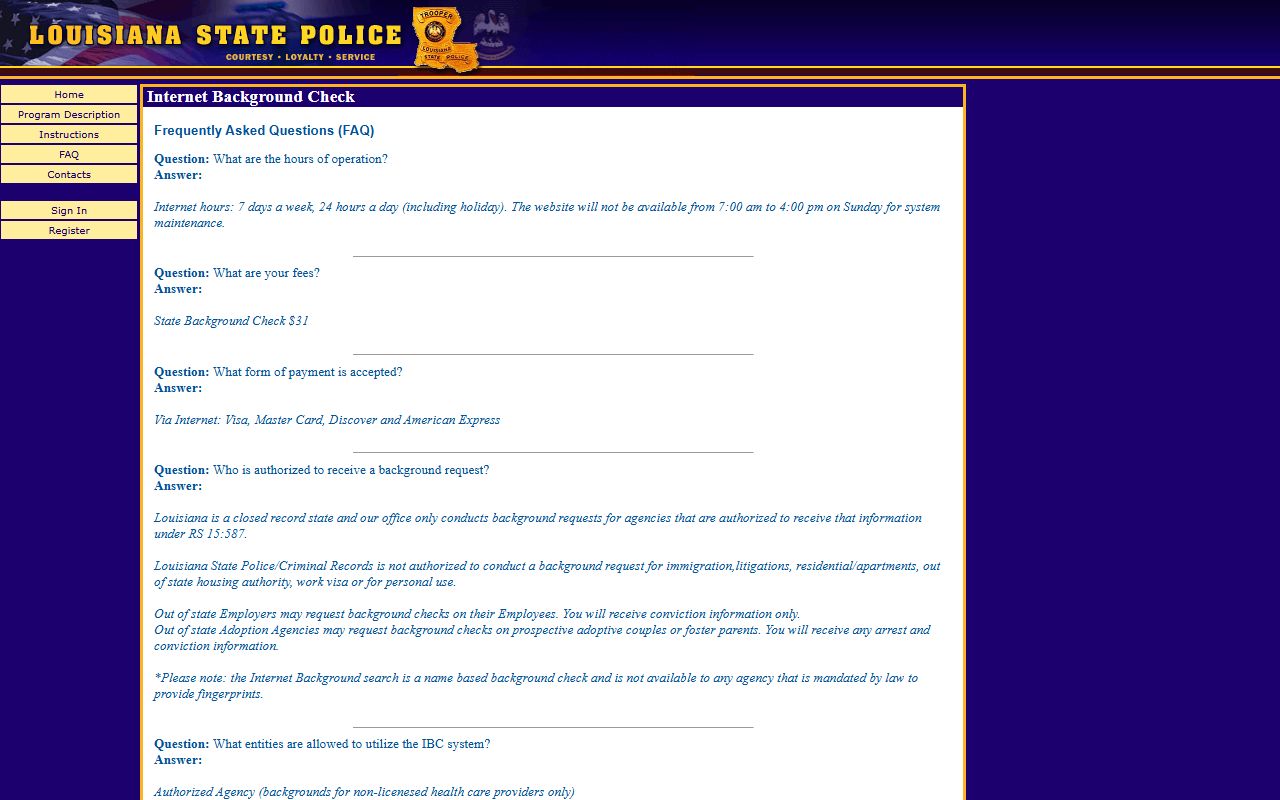
The Louisiana Department of Public Safety runs the Internet Background Check (IBC) system at ibc.dps.louisiana.gov. This web-based tool runs a name-based criminal records search against the LACCH database. The system runs 7 days a week, 24 hours a day, except for Sunday maintenance from 7:00 AM to 4:00 PM.
The IBC costs $31 per check. That breaks down to $26 for processing and a $5 warrant records technology fee that took effect December 1, 2024. You pay with Visa, MasterCard, Discover, or American Express. The system can process up to 20 warrant records checks at once with a single card payment. To run a warrant records search, you need the person's full legal name, race, sex, date of birth, Social Security number, and driver's license number.
The IBC returns one of four response codes. Code 1 means no criminal warrant record was found. Code 2 means fingerprints are needed to verify a possible match. Code 3 means there is a delay in processing. Code 4 means a positive criminal record exists, and a detailed warrant records report gets provided. Search results stay available for 14 days. After that, you need to submit a new search request with payment.
Note: The IBC is a name-based search only. It covers Louisiana records but does not include other states or federal records.
Louisiana Most Wanted and Active Warrant Lists
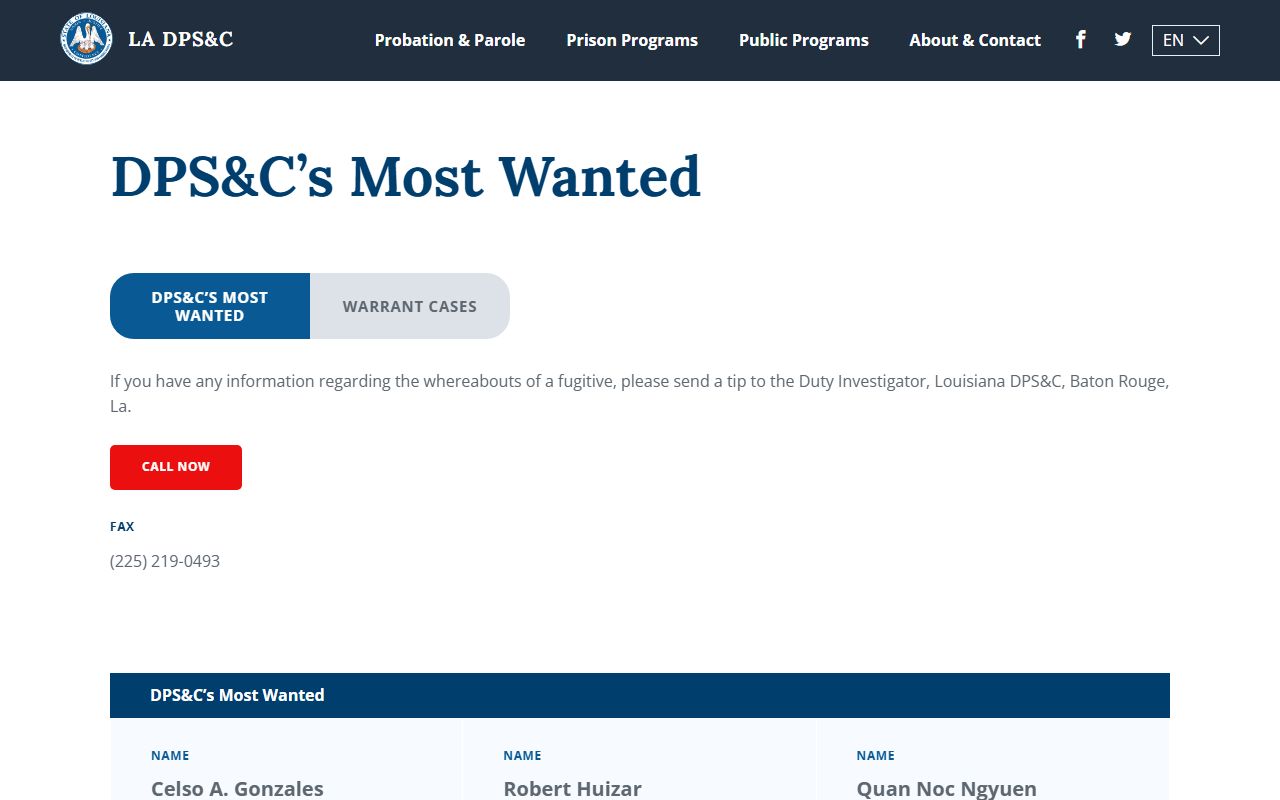
The Louisiana Department of Public Safety and Corrections publishes a Most Wanted list of fugitives at doc.la.gov/docs-most-wanted. The list currently shows 21 fugitives who have escaped from Louisiana prisons and work release facilities. Each entry shows the person's name, date of escape, the facility they escaped from, and any known aliases, markings, or tattoos.
The warrant records for escapes on the current list span decades. The oldest dates back to 1949, when an inmate escaped from Louisiana State Penitentiary. The most recent is from 2015. Facilities with escapes include Louisiana State Penitentiary, Ouachita Work Release, Avoyelles Parish Prison, St. Martin Parish Prison, St. Martin Correctional Center, Tangipahoa Sheriff TWP, and others. If you see someone on the list, do not approach them. Call your local law enforcement or contact the DPS&C duty investigator. Tips about warrant records can also be faxed to (225) 219-0493.
Many parish sheriffs also run their own most wanted pages. Cameron Parish, East Carroll Parish, Claiborne Parish, LaSalle Parish, and Livingston Parish are among those that post active warrant lists or most wanted pages on their sheriff's office websites.
Louisiana VINE Warrant Records Lookup
VINE stands for Victim Information and Notification Everyday. Louisiana runs this system through LAVNS (Louisiana Automated Victim Notification System), now known as Louisiana VINE. It covers warrant records for all 64 parish jails and all state prison records. You can search for inmates at vinelink.vineapps.com/state/LA or search by calling 1-866-LAVNS-4-U (1-866-528-6748). The search service is free to access.
When you find someone in the system, you can sign up for automatic alerts. VINE notifies you by phone, text, email, or TTY when the person's custody status changes. That includes release, escape, transfer, bond, parole, court warrant orders, and death in custody. The system calls every hour for 24 hours until you enter your PIN to confirm you got the message. It supports English, Spanish, French, and Vietnamese.
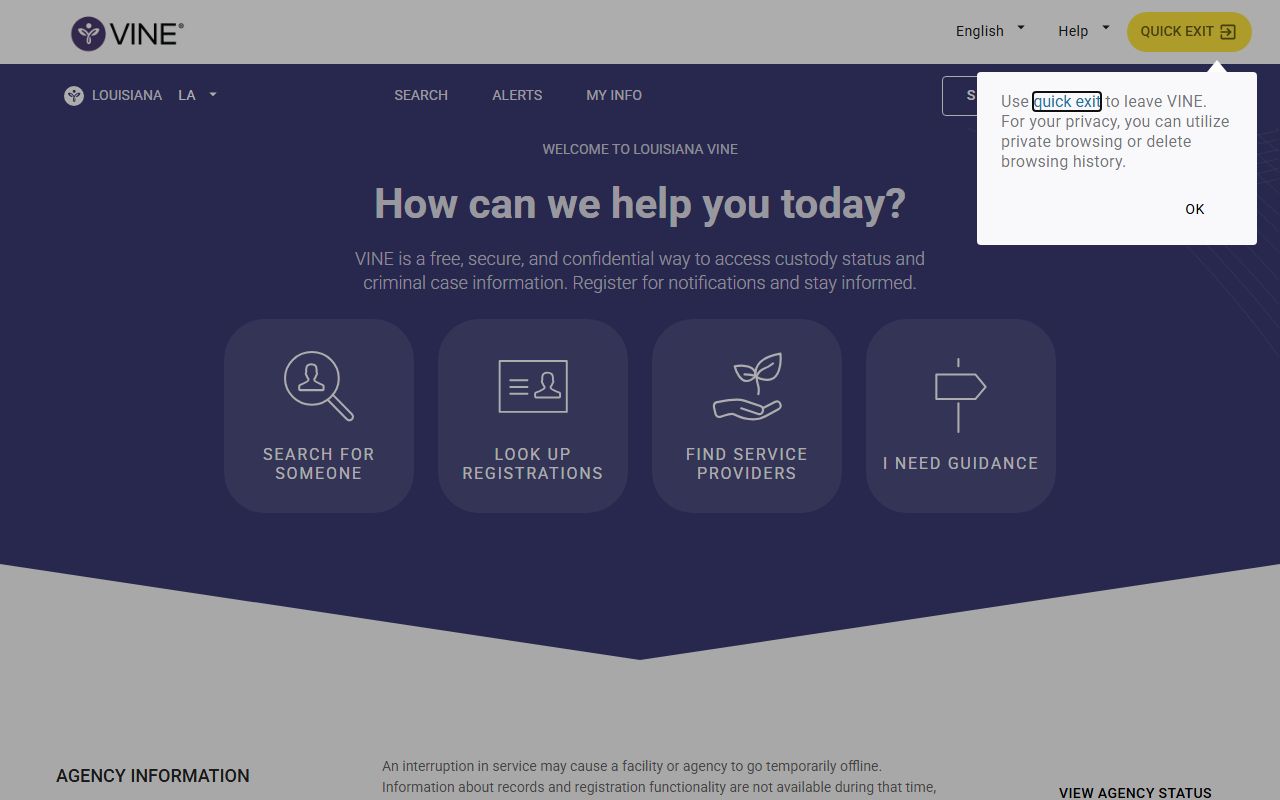
VINE also tracks court events. You can get alerts for upcoming court dates, hearing changes, case status updates, and dispositions. The statutory authority for this system comes from LSA-R.S. 15:1229, which created LAVNS within the Louisiana Commission on Law Enforcement. The system collects data around the clock, 365 days a year.
Note: VINE shows inmates in custody and tracks court events. It does not list people with open warrant records who have not yet been arrested. To find those warrant records, search through the parish sheriff.
Louisiana Supreme Court Warrant Case Records
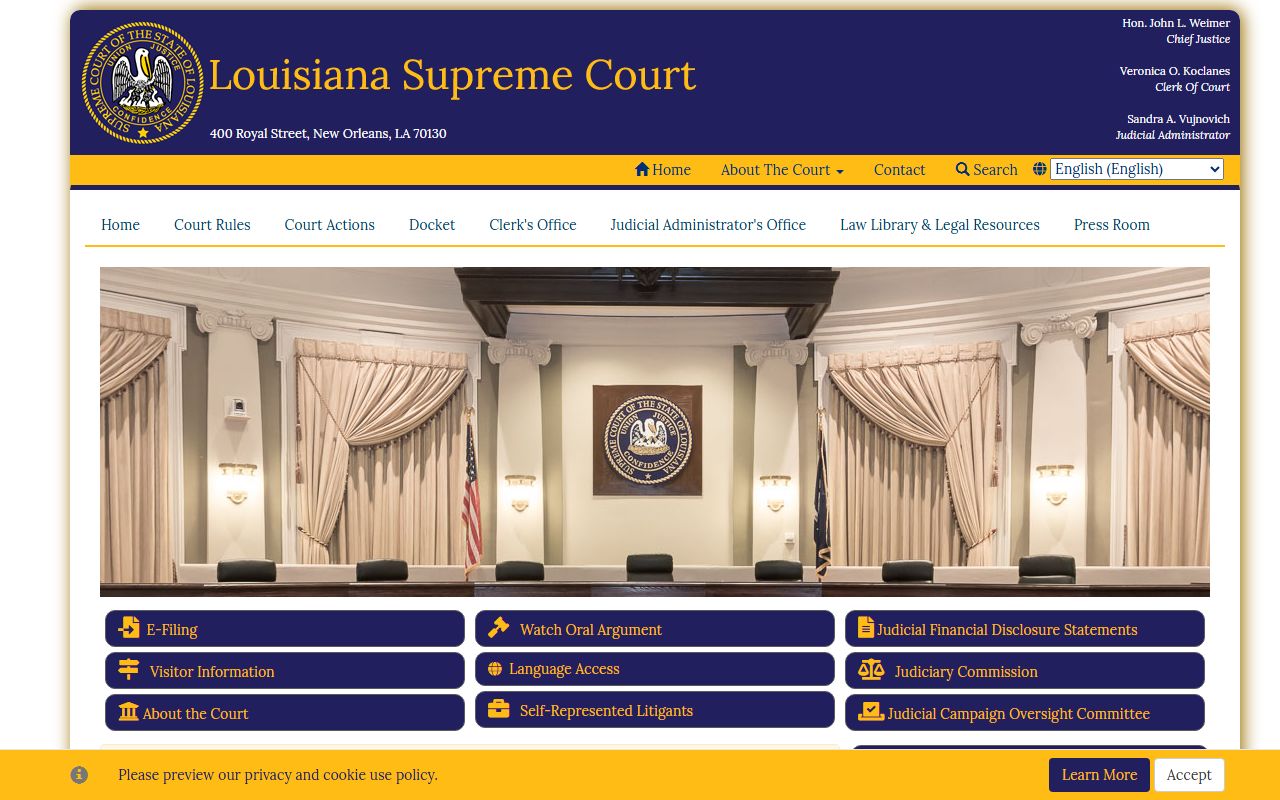
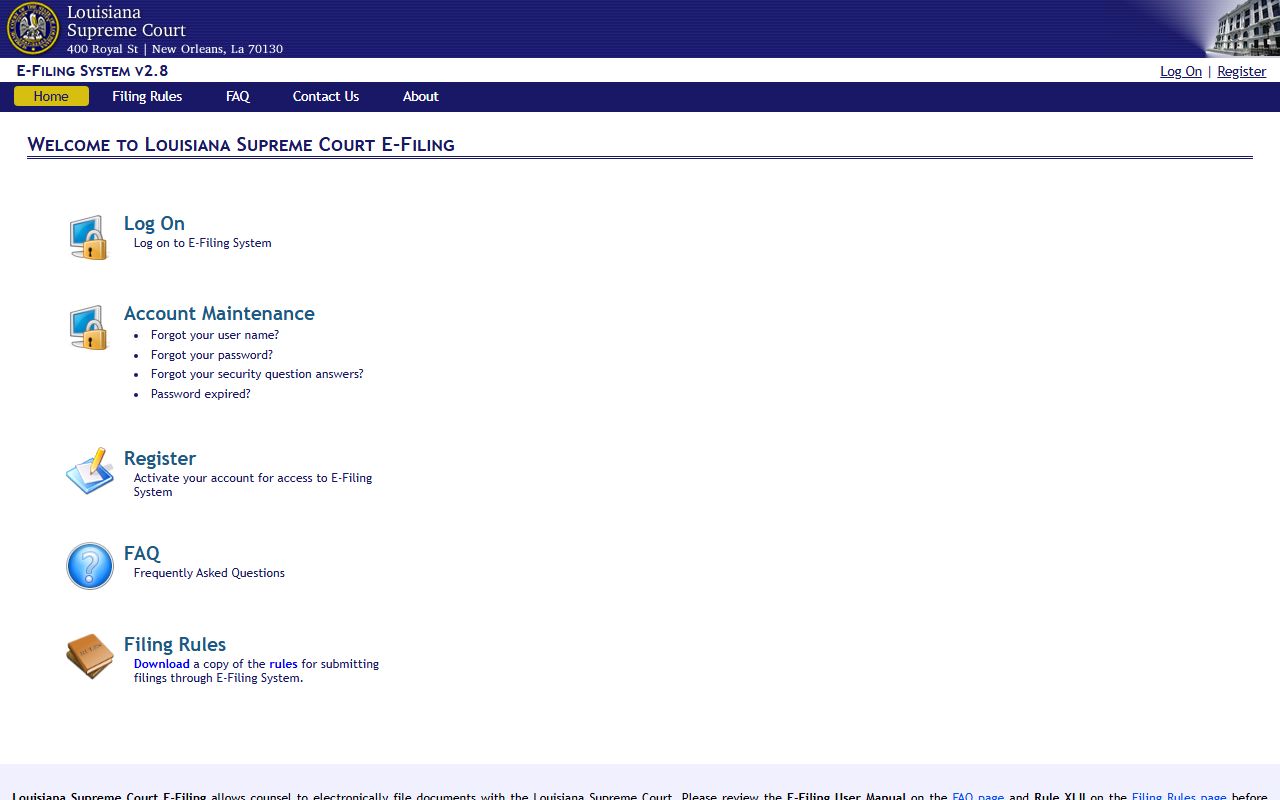
The Louisiana Supreme Court at lasc.org handles the highest-level criminal appeals in the state for warrant records. Their e-filing system at cdx.lasc.org lets attorneys access case filings. The public can search court dockets by case number or party name. Published opinions are available to access from 1996 to present. Historical cases from 1809 through 2004 are on JSTOR through the Historical Archives of the Supreme Court of Louisiana.
For most warrant records searches, you will work at the parish district court level. But the Supreme Court records matter when a case has gone through the appeal process. Each parish district court handles the bulk of warrant filings. The clerk of court in every parish keeps warrant orders, arrest warrant affidavits, warrant case dockets, and warrant judgments.
How Louisiana Warrant Records Are Created
Warrants in Louisiana are issued under the Louisiana Code of Criminal Warrant Records Procedure. Articles 202 through 204 govern arrest warrant records in the state for warrant records. A judge or magistrate issues an arrest warrant when a law enforcement officer shows probable cause that a person committed a crime. The warrant names the person, states the charge, and authorizes any officer to make the arrest. Article 203 covers the form and content. Article 204 outlines how warrants are served.
Bench warrants work differently. A judge issues a bench warrant record when someone fails to appear in court or violates the terms of a court warrant order. These go into the same law enforcement databases as arrest warrants. Your local sheriff or police department can check for bench warrants by name. Bench warrants stay active until a judge formally recalls them.
Search warrants are a third type. Under Louisiana C.Cr.P. Art. 162, a judge issues a search warrant when law enforcement shows probable cause to search a specific warrant records place. Search warrants are not typically part of public warrant record searches. They are criminal case records and may be sealed during active investigations.
Louisiana Public Records Law and Warrant Access
Louisiana's Public Records Law at La. R.S. 44:1 gives every person the right to inspect and copy public records. Warrant records are generally public. Court records that include warrant filings, arrest warrants, and bench warrants fall under this law. You do not need to be a party to a warrant case or give a reason for your records request.
Some limits apply. Active investigative records may be withheld while an investigation is open. Juvenile records have special protections. Sealed records are not public. But once a warrant has been issued and entered into the court record, it is generally accessible through the clerk of court or the sheriff's office. Warrant affidavits may be held back if they would compromise an active warrant records case, but once the warrant is served, the record usually opens up.
Standard copy fees across Louisiana are about $1.00 per page. Certified copies cost more. The exact fee depends on the parish warrant records. Contact the clerk of court or sheriff in the specific parish for their fee schedule.
Search Louisiana Warrant Records by Parish
Each of Louisiana's 64 parishes has a sheriff who serves as the chief law enforcement officer. Parish sheriffs run the main warrant databases at the local level. They process arrests, hold people with active warrants, and coordinate with other agencies across the state warrant records. Most sheriff offices will check for active warrants by name over the phone or in person.
To search warrant records at a parish sheriff's office, you typically need the person's full legal name and date of birth or approximate age. A valid photo ID is required for in-person warrant records requests. Some parishes accept public records requests by mail or email. Others need you to visit in person or call.
The level of online access varies by parish. Some, like Cameron Parish, Claiborne Parish, and LaSalle Parish, post active warrant lists on their websites. Others, like Calcasieu Parish, have a Warrants Division that handles inquiries by phone at a dedicated number. Standard hours for most sheriff offices are Monday through Friday, 8:00 AM to 4:30 PM.
Clerk of Court Warrant Records in Louisiana
Each parish clerk of court keeps all court warrant records filings including warrants. The clerk's records show when a warrant was issued, what case it is tied to, and the current status. This is useful to check records when you need the official court record rather than just a status check.
Several statewide online systems connect parish clerks. ClerkConnect at clerkconnect.com provides subscription access to court records in many parishes, including Bossier, Caddo, Jefferson, and Orleans. eClerksLA at eclerksla.com is another portal used by multiple parish clerks. These tools let you search case filings, see warrant orders, and access court records from a computer. Some parishes also run their own online search tools. Beauregard Parish Clerk offers online criminal suit records from 2009 to the present at beauregardclerk.org.
Note: Some parishes charge for online warrant records access. Contact the clerk in the specific parish for their current fees and online search tools.
Browse Louisiana Warrant Records by Parish
Each parish in Louisiana has its own sheriff and clerk of court who handle local warrant records. Pick a parish below to find contact information, search methods, and resources for that area.
Louisiana Warrant Records in Major Cities
Louisiana cities work with their parish sheriff and local courts to handle warrant records. Pick a city below to find warrant search resources for that area.